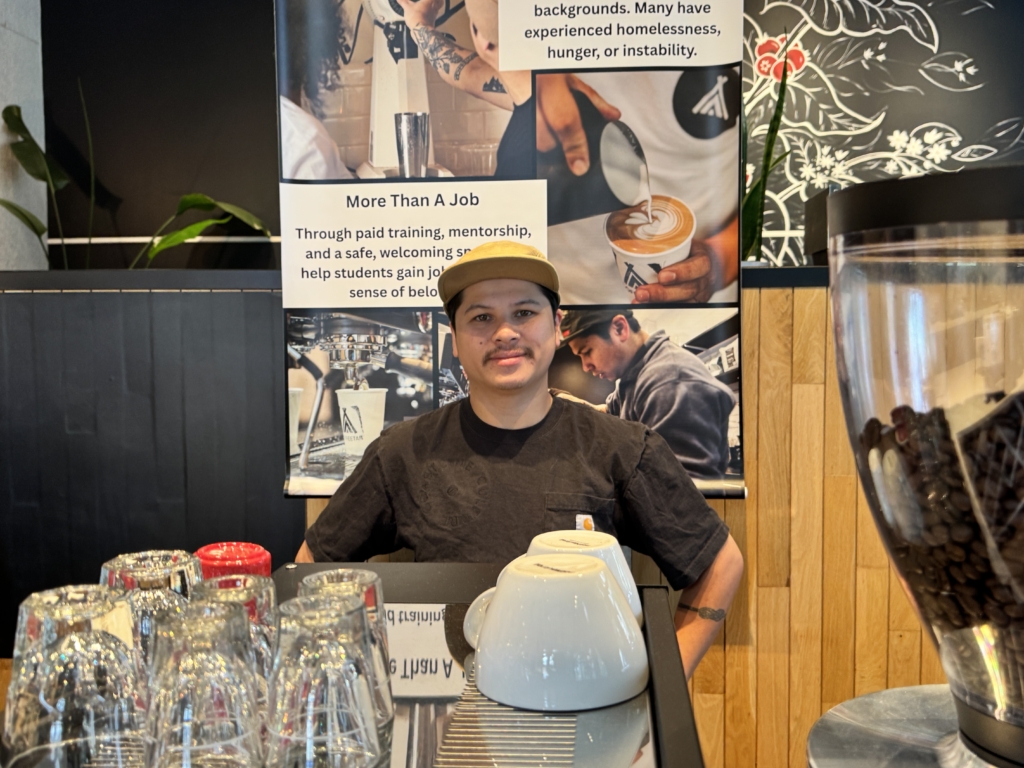
In this interview, we catch up with Johnathan from Coffee TAB, the Belltown-based specialty coffee shop that’s as mission-driven as it is community-loved. Since winning “Rookie of the Year” at last year’s Intentionalist Awards, Coffee TAB has expanded into a new flagship space—one that’s not just beautiful but also allows them to scale their nonprofit apprenticeship program for underserved youth. Johnathan shares how the shop’s growth has opened up more job opportunities, why they’ve transitioned away from tipping, and what’s ahead—including the possibility of a second location. It’s a conversation about coffee, community, and creating real pathways for young people in Seattle.
You won the Rookie of the Year award at last year’s Intentionalist Awards. What’s been happening since?
Thank you to everyone who was able to be a part of that decision-making process, it’s been really cool to see people recognize Coffee TAB in other spheres other than Belltown. Winning Rookie of the Year, which was a huge honor at our end – both being able to get inaugurated into this wonderful community that supports one another, but then also being able to do our part to contribute to the growth and life and revitalization of Seattle.
You’ve moved into a new space in the last few months. Tell us about this gorgeous new shop!
And what is the new location in this expanded space allows you to do with the non-profit side of the business?
CoffeeTab is a specialty coffee shop in the heart of Belltown, but we double as a non-profit. And on the non-profit side, what we do is we work with underserved young people. We provide barista job training and life skills mentorship.
This space allows us to present up to five barista apprenticeship roles per cohort. At the last spot we were doing one or two which is what we had space for – which wasn’t that fluid and or organized. So here we’re going by the proper quarterly cohort for 12 weeks.
We have anywhere between three barista apprentices to five barista apprentices. The other cool opportunity is we’re kind of shifting our model where at first we would train these young students. They would get through the program and we would do what we can to help launch them into other coffee shops.
That still is a part of our training model but we ran into the scenario and most of our apprentices do want to stay within the company just because they are used to our standard of how to operate, how to craft drinks. They just really like our barista trainers and us as a whole. So with this expanded building, expanded operations not only do we get to train more students but we get to potentially offer more part-time jobs when they graduate out of their apprenticeship program.
You have also transitioned away from accepting tips. Can you share a bit more about that decision?
I’ve been in the service industry since I was able to work, and I’ve always worked for tips. And for the most part, it was paycheck to paycheck, and that’s just not a good way to live in my personal opinion. And our team, they work really darn hard, and they take a lot of pride in what they do.
Our mission statement here at Coffee Tap is we encourage others to live a higher quality life through a higher quality cup of coffee. So with that expectation, our team, they work really hard, they know their craft, and they always put their best customer service face forward. Unfortunately, not everyone receives that well to the point where tipping is a norm, and I think it would be doing the team an injustice by having them rely on tips to budget and for their livelihood.
If your team’s happy, customers are happy. If customers are happy, the organization is growing. So for me, I kind of took that personal kind of challenge: iif I believe that my team are great at what they do, (which they are) and that they do strive to be the best baristas they can, (which they do,) then rather than them expecting the tip pool to pay their payroll and their bills, why not Coffee TAB take a chance on them?
Okay, so what’s ahead? What do you see for the next 12 months of Coffee Time?
This is the very beginning phases, but there are conversations about a second location, which is super exciting. We barely settled into our new flagship location and we already have offers from landlords because they see that we’re able to take a vacant unit with a really small budget and we’re able to turn it into a very well-respected and fun environment in a cafe setting.
Most importantly, we do have data in regards to the students that we work with that come from all over the city, from underserved young people to young folks that are transitioning from homelessness. We work with foster students. We just brought on a young man who just came to Seattle on refugee status. So we are widening our horizons in regards to who we work with.
The biggest thing is not only do we want to give them a foot in the door in the coffee industry, but we want to be able to support them past their apprenticeship, which means having more positions for part-time or full-time baristas. And that means the necessity of having one or two more locations.
Yeah, it’s kind of cool because to that point, it’s like we were able to retain every team member from that last door and when we moved over here not only did they keep their job and they want to continue to work with us, but when they kind of got settled into this new environment, then they asked for more responsibilities, more hours, and just wanted to kind of grow with the company, which is really cool because mentorship and development is what we’re all about.
Okay, so how has the neighborhood been since you moved from that corner to this corner? Same challenges?
As weird as it sounds, one block over makes all the difference. But also I think the space and the atmosphere makes a difference as well.
Back when we were on 3rd Avenue, it was a 230 square foot cafe space and we were a grab-and-go, not a sit-down cafe. I was only able to keep one or two baristas on shift at a time. Whereas here, we normally have anywhere between three to five baristas depending on how busy we are.
And then with more bodies, more eyes, more ears, more accountability. So team morale has been at all-time high just because the team feels safer when they come to work, which I think is a huge important factor as an employer to take note of because your team, the happier they are, the happier the customers are. The happier the customers are, the more life-giving the company is.
We’ve been in this space for about four months now. We have tons of seats. We’ve got warm food, breakfast paninis, sandwiches, and great coffee. Please come on down and meet the team!